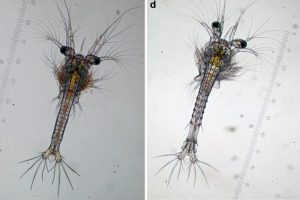

Zoea 2 Syndrome is not a standard term in international scientific literature but may be a local term referring to mass mortality at the Zoea 2 stage. In the shrimp life cycle, after hatching from eggs, larvae progress through stages: Nauplius, Zoea, Mysis, and Postlarva. Zoea 2 is the second phase of the Zoea stage, where larvae begin to resemble small shrimp with distinct body segments. This phenomenon is frequently reported in hatcheries, particularly under intensive farming conditions.
Causes
Research suggests the primary cause is infection by Vibrio spp., such as Vibrio alginolyticus and Vibrio harveyi, introduced through contaminated water, improperly treated Nauplii, or infected feed/algae. Other contributing factors include:
- Poor water quality: High ammonia levels (>0.1 mg/L), low oxygen (<4 mg/L), or unstable pH (below 7 or above 8.5).
- Nutritional deficiencies: Larvae lacking sufficient HUFA (highly unsaturated fatty acids) or vitamins become weakened and susceptible to disease.
- Environmental stress: Temperature fluctuations (>±2°C) or sudden salinity changes (>2 ppt) increase risks.
However, the extent of each factor’s impact remains debated, as some hatcheries report this issue despite meeting water and feed standards, suggesting other unidentified causes.
Symptoms
Larvae affected by Zoea 2 Syndrome exhibit the following signs:
- Feeding cessation: Discontinuous gut, absence of fecal strands, and hepatopancreas lacking lipid reserves (no oil droplets).
- Opaque body: Abnormal swimming, progressive weakness, and lack of response to stimuli.
- Failure to molt: Inability to progress to Zoea 3 after 4-5 days, leading to mass mortality within 24-48 hours.
- Mortality rate: Can reach 50-80% if not addressed promptly.
Surprisingly, this syndrome is not solely linked to bacterial infections but sometimes relates to nutritional deficiencies, such as insufficient HUFA, an aspect often overlooked in hatcheries.
Prevention and Management Measures
To control Zoea 2 Syndrome, hatchery operators should implement the following measures:
- Sanitation and disinfection: Clean rearing tanks and equipment with chlorine (200 ppm) or formalin (500 ppm), then rinse thoroughly. Treat water with ozone (1 ppm) or UV (40 W) before use.
- Nauplii treatment: Bathe Nauplii in an iodine solution (10 ppm, 5 minutes) before stocking to eliminate surface bacteria.
- Feed and algae control: Use uncontaminated fresh algae (e.g., Chaetoceros, 50,000-100,000 cells/mL) and high-quality formulated feeds (e.g., Larviva Zoea) to boost larval resilience.
- Water management: Maintain pH at 7.8-8.2, salinity at 15-25 ppt, oxygen >5 mg/L, and replace 10-20% of water daily if necessary.
- Probiotics use: Add Bacillus subtilis (10⁸-10⁹ CFU/mL) to water and feed to compete with pathogenic bacteria.
- Monitoring and early intervention: Inspect larvae daily, conduct PCR tests if Vibrio infection is suspected, and isolate affected tanks to prevent spread.